For example, some shops differ in how they account for non-included items, such as seam sealers, panel adhesives and fasteners. Some track these as a separate sale and some (internally account for) these as an added P&M CGS (Cost of Goods Sold). In this calculation, the net income is equal to the amount of a firm’s total revenues for a given period, less its total expenses. There you have it, some of the fundamental accounting terms and their definitions. This guide on basic accounting terminologies and abbreviations can help guide prospective students or serve as a resource and study guide for current students while completing accounting coursework. If you are considering whether to pursue an accounting degree, check out our Bachelor of Arts in Accounting program.
- It is money owed to a company by customers for goods or services sold on credit.
- Suppose a company needs to borrow $40,000 to purchase standing desks for their staff.
- Asset-backed securities (ABS) are financial products backed by a loan, lease, or receivables against assets other external to real estate and mortgage-backed securities.
- AP (Abbreviation for accounts payable) – A liability account on a company’s balance sheet representing money the company owes to its suppliers.
- A Deferred Prosecution Agreement (DPA) is a settlement strategy under which a prosecutor allows the defendant to avoid prosecution by meeting specific requirements.
- It can be difficult to improve a firm’s net profit ratio, since a business tends to pursue the highest-profit opportunities first, leaving lower-margin sales for later.
Share this article

Earnings Before Interest and Taxes (EBIT) represents a company’s profit before deducting interest and taxes. A Public Limited Company (PLC) is a type of corporation permitted to offer its shares to the normal balance public. Often, these entities are listed on a stock exchange, allowing shareholders to buy and sell shares freely. A long-term incentive plan(LTIP) refers to reward systems used by companies to reward top-level executives or employees based on the company’s long-term performance measures. The Institute of Management Accountants (IMA) is a professional organization primarily consisting of management accountants, financial professionals, and business leaders in the United States. Held-for-sale assets(HA) are no longer required for operations and are hence expected to be sold off within year.
Limited Liability Company (LLC)
AVAIL (Availability) – The percentage of a company’s currently available assets for lending, investing, or other purposes. AUM (Asset under management) – The total value of all the assets a money manager is responsible for. AM (Abbreviation for accounting manager) – The person who is responsible for managing a company’s accounts. Many businesses operate across several sites and via separate departments n/p meaning in accounting that replicate similar activities.
BAC – Bank of America Corporation

Accounting designation representing professionals who have passed tests for business taxes and personal taxes. A business structure in which owners are not personally liable for the debts of the company. Any money that has been earned by the business in exchange for goods and services. Still relying on a legacy or homegrown system to manage your regulated customer communications? As compliance requirements grow more complex and digital expectations rise, outdated CCM platforms struggle to meet evolving demands—making it increasingly risky and expensive to cling to aging technology. Join our session with Aspire CCS for a strategic look at why legacy migration is no longer optional—and how to approach it with confidence.

- Notes payable may also be part of a transaction to acquire expensive equipment.
- Research & Development (R&D) signifies any activity undertaken by businesses aimed at creating new products or improving existing services.
- In the world of accounting, abbreviations and acronyms are frequently used to simplify communication and documentation.
- A type of corporation where the business is taxed as a partnership and double taxation is not performed.
- The formula to calculate ROI divides the benefit (or return) of an investment by its cost.
- A Corporation (CORP) is an organization, often comprising multiple businesses, authorized by law to act as a single entity and recognized.
LTNP funding allows businesses to plan beyond day-to-day operations and fund innovation and growth. Using LTNP credit, you improve everyday control while building products and features to increase future revenue. Notes payable is an instrument to extend loans or to avail fresh credit in the company.
Quick Q & A on Notes Payable
If your company borrows money under a note payable, debit your Cash account for the amount of cash received and credit your Notes Payable account for the liability. Again, you use notes payable to record details that specify details of a borrowed amount. With accounts payable, you use the account to record liabilities you owe to vendors (e.g., buy supplies from a vendor on credit). A note payable is classified in the balance sheet as a short-term liability if it is due within the next 12 months, or as a long-term liability if it is due at a later date. When a long-term note payable has a short-term component, the amount due within the next 12 months is separately stated as a short-term liability.
Cloud Computing vs. Software Engineering: Which Degree Leads the Future of Tech?
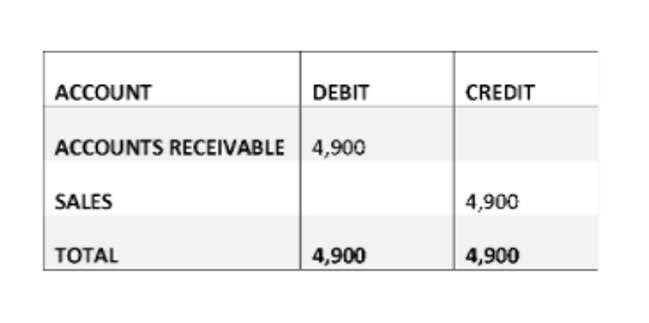
In fundamental accounting, debits are balanced by credits, which operate in the exact opposite direction. The accounting language is filled with terms and concepts that can initially seem complex but are crucial for navigating financial statements, reports, and transactions. Whether you’re studying accounting or working in the field, becoming familiar with key terms will help you grasp how businesses track their financial health and make informed decisions.
- ADJ (Adjustment) – An accounting entry that alters the financial statement balance of an account.
- A high ratio number indicates an efficient management of operational affairs of the entity and a low number might indicate otherwise.
- COD (Cash on delivery) – A payment method used for online or mail transactions.
- In the first instance the note payable is issued in return for cash, in the second they are issued in return for cancelling an accounts payable balance.
- The Internal Revenue Service (IRS) is a government agency responsible for collecting taxes and administering the Internal Revenue Code(IRC), our main body of federal tax law in the United States.
- Note that there is a difference between accounting profit and economic profit.
BO – Business Organization
By the end of this guide, you’ll be well-versed in essential audit terminology, helping you communicate effectively with colleagues and adapt quickly to your professional environment. Julia Kagan is a financial/consumer journalist and Liability Accounts former senior editor, personal finance, of Investopedia. By mastering these abbreviations, you empower yourself with a valuable toolkit to interpret financial jargon and gain a profound comprehension of the complex dynamics of finance.